Game Design, Programming and running a one-man games business…

Financial research and AI

Yup, I’m still doing a lot of work on Ridiculous Space Battles, and recently did a new trailer and took new screenshots, and may even start running ads again… but in the meantime I do a lot of fussing about investments and finance…because I weirdly enjoy that sort of thing.

Somehow, I have ended up a sort of small hedge-fund manager. Its a very small hedge, but its my hedge, and I get to do what I want with it. I know a lot of people who did well from video games who then naturally use that money to make more games, or bigger games, or who publish a bunch of games by other developers. Actually for a while I did that, and published four games by other devs. Its a totally reasonably strategy. The video games business is so hit focused that to be honest the only approach that makes any sort of strategic financial sense is to go for the portfolio model, where you publish ten games and hope that the one hit pays for the nine flops (and this does seem to be the case). However, for me this approach has one huge enormous weakness (in fact two… but I’ll come back to that) – Its a lot of people management,.

I am terrible at dealing with people.

I am not whining about it. Everyone gets a random character-sheet at the start of life, and the attributes that got maxxed out for me have enabled very cool and lucrative career in IT and then video games. The flipside is that some of my attributes are very low and in need of buffs. But given we do not get to re-roll our dice on this, I am just trying to deal with the fact that I will never be someone with a big long list of employees or business partners. Thats never going to work out for me, or for them. I am not easy to deal with.

So here we are, with me managing investments in things instead of a larger games business. I still *make* games, but its just me, using stock bought art, or AI generated art, and even re-using music from a previous game. Its what maximises the fun for me, and minimises the stress. It does mean however, that I have a side-line in fussing with investing the money that my company made. And I did *try* to invest in in tangible things. I built a solar farm! (and may build another), but in the meantime I am invested in about 50 different companies/bonds/funds/trusts, and that takes a lot of time to manage.

I’ve made money, I’ve lost money, and everything inbetween. I made a killing on Tesla stock before he went mad, then a similar killing on Nvidia before Jensen started talking about spaceborne data-centers and financing their customers. I’ve had some big misses too. My bets on Chinese EV manufacturers ran into issues with a china price-war. I am still trying to wait that one out… But the reason I thought I would write about it is that I have used LLMs a LOT in deciding where and how to invest and it is AMAZING.

In a prior life, I worked for a company called Datastream/ICV, which was a stock market data IT company that provided research material and real time market information via satelite to stockbrokers and banks. It was really interesting. Because I tended to support the legacy datastream stuff, I went to a lot of the research offices for the big banks. These were not ‘wolf of wall street’ offices, but more boring, muc quieter rooms full of dozens of serious looking people reading financial reports, reading the news, reading in depth technical analysis… and then eventually preparing reports and summaries so that the actual traders could have some insight into if a company was over/under valued.

It was a lot of work, and clearly very important, and clearly had a good ROI.

And now its almost all irrelevant.

Talking to Claude/Mythos about financial stuff is a revelation. Its SO GOOD at this stuff. All the headlines focus on its unusually good cybersecurity capabilities, but I think thats just because it makes a scary headline. Hearing that 50,000 financial analysts may lose their jobs over the next year isn’t as sexy as Chinese Hackers blowing up the pentagon using their keyboards. I think anybody who has sat and had a long conversation with Claude about whether investment A is better than B, (and why, and what the potential risks were, and what dates to watch, and if your personal investment thesis on that stock holds up to scrutiny) will come away thinking ‘holy fuck this is good stuff’.

I know a TON of really skeptical people who think AI is useless. Almost always they have tried ChatGPT3 a few times, or read a free Gemini summary and think ‘they know all about it’. But a decent LLM is NOT a search engine. Its a research assistant. And when you treat it like that, its incredible. And sure, hallucinations are not solved, and AI can make mistakes. And Claude will make mistakes, but its still, in my experience, an order of magnitude better than any financial website / forum / discord that you can find.

Have you ever actually tried READING an article on Seeking Alpha or TipRanks? The web is not exactly filled with well argued deep impartial analysis on investment topics. Its a trainwreck of hype, clickbait and poorly-informed bullshit. And sure, if you read 25 articles about lithium prices, you *will* at the end of it have some proper understanding of whats going on, but you will wade trough so much nonsense to get there, that it makes perfect sense why the traders farmed all that out to the people in the research room.

Claude will do the same job, reading those 25 articles, searching for deeper context where those articles micht give conflicting data, search further on any topics raised by those articles, then compile it into a concise but pretty accurate report on the topic you asked about. Its especially good at answering the question “If I invest in this specific stock/fund, what am I really betting on here?”. Claude has convinced me to sell a bunch of investments I thought I understood well, but did not. Its recommendation have been extremely extremely good .

I am not a financial advisor, but I’m also not a guy trying to sell you anything. I’m just writing this to share my experience. If you have a pension, or savings and investments and feel unsure if you are invested in the right thing, then I strongly recommend just talking to a PAID premium SOTA LLM and asking it to push back on your choices. And yes, you can just say “DO not patronize me or tell me I am clever, give it to me straight” and they do. In fact I may have gone overboard with these instructions to Claude, which often says things like “Cliff, you are making the same strategic mistake here we have discussed many times before”. I find it kinda funny.

Anyway, give it a go. Its great at this stuff, and WAY better than that bloke in the pub who thinks he knows all about the markets. Even if that bloke is me :D.

A side effect of a potential AI mega-bubble. Maybe do not buy a house?

Nobody should take financial advice from a dude who often writes sarcastic nonsense about star trek, and whose financial background is… guitar teaching and boatbuilding, but on the other hand if you are here, and reading this, then you probably know a bit about me, and know I at least put some thought into these posts. Maybe this is all BS, but maybe it isn’t. Enjoy…

If you are someone who thinks AI is a bubble, and that it will pop soon, and its no different to NFTs, VR gaming or 3D TV, then you might as well quit reading now. This is not a blog post about how AI will change the world and usher in a star-trek like future of abundance and happiness. I actually think it MIGHT do that, but my main thrust here is the financial implications for somebody reading this in their twenties. If you are in your thirties, you might be in house-and-kids mode, and this advice might be useless for you. If you are older still, then it may be even less relevant. It also may sound insane, or scary, but at the least I hope it will be interesting.

I’m 55, I bought a house about 25 years ago. It was hard saving up the deposit for a house, and at the time, we thought house prices were insane, and stupid, and hated knowing we were probably buying at the top of the market. Ha ha. We were not. My first house was a 3-bed semi-detached house costing £98k. It wasn’t anywhere special, but it was ok. I think it had tripled in value when we sold it 10 years later. So far, a typical smug boomer story about how cheap houses were back in my day. Feel free to hate me.

People my age got used to the crazy certainty that house prices only went up. Many became ‘buy-to-let landlords’, and the default retirement plan was to buy a second home, rent it out to some poor young person who couldn’t afford the now much bigger deposit, and enjoy the fat easy profits. As someone who came from a pretty low income in my twenties (boatbuilder), I hated this and never did it, but I noted the phenomena with interest. Almost nobody ever revisited this core belief: that getting a mortgage was always an excellent investment. Nobody ever looked at a spreadsheet or did any maths. You just invested in property. Safe as houses.

I was recently chatting to friends about stock market investments. I do a lot of investing and trading. I love it, and have done well from it. I enjoy debating it and discussing it with people. I am however aware, that the advice you give people has to be tailored to their circumstances. I invest in some really risky stuff with money I can afford to lose, but many people cannot (obviously) afford to lose *anything*. How do you give advice to people in those circumstances? Its hard. But the very fact that you then find yourself recommending really ‘safe’ investments with really low returns (but little chance of financial ruin) is kind of depressing to me. I get WHY people do this, but on the other hand its just perpetuating inequality. People on low incomes pick safe investments and make bad returns, while the real mega-gains are effectively ‘reserved’ for people who already have enough money to take the risks.

In the UK we have official terms such as “self-certified sophisticated investor” and “high net worth individual”. These are terms used in financial services to basically fence-off some risky investments so that only people who are either very familiar with financial systems, or who have quite a lot of money, can invest in them. Sure, I get it. Nobody wants a system that robs people on low incomes of everything they have, but part of me hates how those amazing companies that go up 900% in a year only have investors who were already rich. Surely this is kind of fucked up?

Ok, so back to AI, and buying a house (or not). How is this relevant?

When I was saving a deposit for a house, I think we needed a minimum of £5,000 ($6k). That was between two of us. This seems laughably low now (it was 25 years ago remember). I did some research. In the SE of the UK, the average first-time-buyer house deposit now is £60,000, which is 110% of the average salary. This is huge. This is insane. Who can afford this without wealthy parents ‘helping them out’? Neither of us had wealthy relatives. We had to pay the rent AND save enough money. Who can save 110% of their salary? Thats salary, not take-home pay…

What I’m thinking… is that this might be a BAD idea anyway. Not just because its a ludicrously high amount, but because the return on investment from property might not be that great. In fact, in the SE UK over the last 3 years the average house price rise has been 1.9%. Yes ONE POINT NINE PERCENT. I think you can see where I am going here:

Nvidia stock over those 3 years rose 1,103%. If you were boring and just picked the S&P500 its up on average 19% per year. So even if you had NO idea what to invest in, and just picked a US stock fund tracking the biggest names, you would make ten times as much money than if you have bought a house. And to add to this, you can invest a small amount (probably you need $1k to avoid mad fees), and build from there, unlike a house, where you are either buying the whole damn thing or not. Oh and by the way, the interest on the rest of the house cost is WAY more than 1.9%.

Thats the last three years, and the stock market has done ‘fairly well’, but there is a good chance its about to go really bananas, if AI lives up to its promise, and results in huge economic growth. If you pick wisely, you could get way more for that ‘house-deposit’ money if invested in stocks than you could ever hope to get from house prices rising. Now I get it, this might sound like the idle musings of some arrogant ass who owns a house and is going all ‘let them eat cake’. I hope not, because its not like I do not understand the financial struggle when you want to buy a house. I totally remember paying rent for an AWFUL flat, which was freezing cold, and saving up our money to try and get enough to buy our first house. We searched for ages, and they were all awful, until we lucked into finding one that looked awful at first glance (someone had died, and the interior decor was….bad), but was easy to do-up. I have no idea how many houses we looked at…

But anyway, my point is aimed at people who SOMEHOW manage, through hard work and effort to scrape together the money for a deposit for a house whilst working and renting, just to say *actually this might be a really bad investment right now*. Now I understand that renting sucks, and you want to own a home, and are not thinking about investment but… make the right decisions now, before AI goes insane, and it might prove to be the best financial decision you ever make. Wait a few years, watch those investments outpace house-prices, and THEN buy…

I get that this might sound crazy.

But think about it unemotionally. Don’t think about emotive terms like ‘my own home’ and ‘what we have been saving for’. Just think about the numbers. You have the largest single sum of money you have ever accumulated. You saved it up for a house, whose value will accumulate at 1.9%. Or you can invest it (with careful research!) into the stock market just before AGI and humanoid robotics and self driving cars became popular. And obviously this assumes you already have somewhere to live (either rented, or with parents etc). Yes there is risk, but there is also no guarantee house prices will always rise.

Food for thought. But this is just a thought experiment. Do not blame me for any financial decisions you make! And think carefully and analyze everything, and discuss with friends & family! I will just point out that I am a game developer and solar farm developer. I’m not trying to sell you stock market advice, and have no financial interest in what you do. But do look at the numbers. Always look at the numbers.

AI is accelerating on a daily or even hourly basis

The level of progress in AI in the last few months is absolutely mind blowing. If you are not actively following the field, then you might think that basically we had ChatGPT, and everyone got excited, but basically its all hype and nothing has actually changed. OMG This would be so wrong. Things are accelerating like crazy. You have probably heard about DeepSeek, and also heard people claiming its no big deal. They are probably wrong. We are in the middle of an absolutely seismic shift.

First, an update. There is a new version of grok (the AI chatbot built into X) which is staggeringly good at code. I’ve been talking to grok on a daily basis about the code for my next game. Its helped me optimize some functions, and taught me some new tricks. It even takes optimizations it suggests, and uses my own code (which I give it snippets of) to teach me how I should apply the recommendations it has. I have genuinely learned more new stuff about C++ in the last month than the previous 20 years, and I’ve been coding since 1981.

One big ‘wtf’ moment came yesterday. I was thrilled that having asked grok about some slow code, it managed to help me redesign the high level algorithm for my particle system to make it run 36% faster. But when I gave it a function to speed up, this bit blew me away. I gave it zero context, but just pasted a function and said ‘optimize this’. It did a phenomenal job, but without even mention it, it altered one line of my code:

const float bottom = sp.Y + halfw; // Fixed: bottom should be +halfw, not -halfw

It silently found a bug, and fixed it (perfectly) without even needing any context. It looked at the surrounding code, and the variable names, and deduced correctly that I had copy/pasted a sign wrong. WTF?

Grok is superb at C++, and I ask it regularly for help in speeding up existing code, or ask it if a proposed algorithmic change will make sense, work, or be a faster or improved approach. Its absolutely superb. I cannot now imagine coding without grok, or a similar code-focused LLM to assist me. I code faster, write better code, and am more productive. Programmers who refuse to use AI are going to be in work another year at most. Maybe less than six months. And junior coders? very unlikely to get promoted or another job. Your employer is probably looking to get rid of you. The senior coder can now do 2x the work. Why pay for a junior too?

If you want a great example of how to use AI, ask it to code a website for you. Its excellent. I redid the layout and formatting code for my energy company website in seconds with grok. I simply said ‘make this look better’. The idea of ever bothering to hire someone to write HTML/CSS now seems laughable. My next game will need php, I anticipate writing it will be 5x faster using grok. Every company that develops websites is probably looking to shed 50-75% of their staff. If all you do all day is look at website mockups and write CSS/HTML you are now probably unemployable.

Do you want more examples?

Ask an AI chatbot to put together a travel schedule for a holiday for you, tailored to your likes and dislikes and budget etc. Its already better than any high end travel-agency. Goodbye everyone in charge of bespoke holiday planning. Are you thinking of buying a car or a TV? ask grok to build you a table with a cross-product analysis of the top 10 options with a focus on the attributes that matter to you. It takes seconds, and its amazing. If grok went from $5 a month to $50 a month, I’d pay it without question, right now.

Have you tried sesame? Do you think AI voices seem un-natural? not any more: https://www.sesame.com/research/crossing_the_uncanny_valley_of_voice

Imagine in 3-6 months we see voice generation even better than that powered with even better and more knowledgeable chatbots. We now have a super-informed, constantly available technical expert in many fields available through a trivial voice interface that can replace researchers in many fields, analysts, travel agents, call center staff, web developers and programmers. The number of jobs about to disappear are definitely in the millions, probably the tens of millions, even assuming zero progress after this year. And we are not even truly getting started yet.

Country Estimated Call Center Employees (2025)
United States 3,100,000
China 1,800,000
Japan 600,000
Germany 450,000
India 2,200,000

Obviously I didn’t google that list, I got grok to research it, format it, and tell me how to add it to wordpress. But yup, lets assume 90% of those jobs are toast within a year, so at least 8 million jobs gone, to be replaced by datacenters. You might think this will be politically difficult, but no. Its simply impossible for your economy to compete without this tech. Not only can AI voice assistants replace your call center staff for a tiny proportion of the cost, they will never get angry, emotional, stressed, or confused. They can even respond in any language or accent, or with any ’emotion’ you might want. They will never forget to upsell and they can stay talking to customers longer, because the cost per call will be trivial.

Pretty much any junior knowledge worker job is about to go. There are rooms full of well paid middle class employees doing research into businesses to provide analysis for stock market professionals. They all just lost their job. Every one of them. Grok can already do this better, and manus can build you a customised dashboard to analyze any financial instrument by any criteria imaginable: https://manus.im/share/5z6bnP67LtUjsti8YaIlJq?replay=1

If AI soon cracks self-driving cars (and we may be close) then lets fire every taxi and truck driver on the planet too. Thats going to be a phenomenal shock. Sort out some humanoid robots to unpack a truck and hand over parcels and the postal; servcies and delivery drivers are all gone too. Iminent? nope, but within 5 years? I think so.

Politicians are focused so much on geopolitical issues surrounding the middle east, russia/ukraine and numerous other issues that almost none of them are even giving the topic of AI powered economic growth and the resulting combination of a boom AND mass unemployment and thought. This is absolutely insane.

We are currently all standing at a crossroads. As individuals, societies and economies, we are about to race in one direction or another. Those who adopt AI, harness it, and benefit from its financial implications are going to be staggeringly wealthy. Those who stand there like a rabbit in headlights as everything changes will be unemployed AND unemployable. Whole economies are about to crumble, and others are about to race ahead. Its going to be a future where the top 5% of knowledge workers and tech companies will race ahead, and the bottom 9% gets obliterated. Countries that invest in AI will thrive. Others will become client-states, or stagger into barely-managed decline.

Nobody knows for sure, but I suspect China is about to do VERY WELL. Its very focused on AI, and tech, and chips, and higher education. So is South Korea. Japan could go either way. Taiwan is poised to do very well. The big questions are Europe and the USA. Right now… my best guess is the US suffers severe shocks. Its about to get humiliated in tech by China, and will speedrun the layoffs of middle-class knowledge workers while the government does nothing to cushion the shock. Europe? it could go either way, although I fear we may miss out too.

But as individuals? what do we do? I would suggest you buy shares in Nvidia and TSMC. At the very least try and own a chunk of the future, even if its a small chunk. Good Luck.

Global investment and the coming chaos

When I am not making games or building a solar farm, I am quite into investing on the stock market. I am NOT a day trader, but over the years I have built up enough to invest that it does require me to constantly keep an eye on stuff. I also like reading about the world, and technology, and politics, so it fits in nicely. As a result I spend a lot of time thinking about where to invest.

Investing is super hard, because it involves keeping emotions in check (hard), being objective (hard) and for best results, being happy for absolutely everyone to tell you that you are wrong (I find that quite easy tbh). It also involves a lot of risk, and you have to be ok with all of that. Plus it involves a lot of checking numbers, and being objective, and not making panicked decisions.

Because I think that short term swing/momentum/day trading is more likely to result in losses than gains, I focus on picking shares that will give me a decent return over the next 1-5 years. I have found this is the approach that works best for me. Its certainly not as EXCITING as day trading, but I actually want results, not a sugar rush. So I find myself thinking hard about what the future may bring. Ultimately I am a value investor: I am buying stocks where I think the underlying company will be very profitable in the future. I DO hold some dividend stocks and bonds, but most of my picks are for stock-price-growth, where I assess that a company will have rising profits in the next few years, and I will sell once the stock price catches up to my point of view.

Individual companies can be very good investments, regardless what the people selling funds and generic investment advice tell you. If its obvious that 50 of the stocks in the FTSE100 are rubbish, why would you want to own ANY of them? If your funds are limited, indexes and funds might make sense, but when you are able to pick 50-100 stocks, its worth taking the time to pick winners.

So anyway, with all that in mind, what am I currently thinking about when it comes to upcoming events and themes that might influence investment? I have a bunch of ideas:

  1. The decline of the USA : This is quite a big one, and probably very triggering for people who live there, but I think USA in 2024 is the UK in 1930s-1940s. A big global superpower that has not yet realized that it is screwed, despite all the signs being there. The US has incredibly tribal politics, huge social-division, bad levels of skills/education, bad infrastructure, a colossal debt problem, and a bad global image. Sure, the $ is a popular global currency for now, but in 5,10,15 years? I think China is clearly overtaking the US in everything that matters. I also think the US is so focused on its own awesomeness that they will not manage the decline well. I am hugely over-invested in US stocks but will be diversifying out of there.
  2. Clean Tech Revolution: The entire planet will embrace electric cars, solar & wind power, battery storage and heat pumps. Nuclear Fusion is too late, too pricey and too concentrated. There is no stopping this transition now. Along the same lines we will likely see a global transition away from meat consumption towards vegetarian or vegan diets. Thats a movement that is just too big and especially too popular with the young for it to be stopped.
  3. Rise of Asia: I mostly focus on China. The predominant view in western media is filtered through frankly xenophobic and tribal hatred of China in the US media. But the Chinese are starting to lead in tech, science, infrastructure, and geopolitical influence as well as manufacturing. They even have their ow space station, something the USA cannot afford. I do not expect war with Taiwan, but I expect savvy Chinese leaders to rattle just enough sabers to keep bankrupting the USA with its ridiculous military budget
  4. New Space Race: Not just spacex, but a whole range of new space startups is revolutionizing our capabilities in space. Starlink is the first tangible benefit but there will be more. Space Tourism will be one part, but zero-g manufacturing may well become a thing for some specialist pieces of technology. I fully expect all major cabled telecoms links to be replaced by satellite networks soon. Its just so much simpler.
  5. Fall of Russia / Chaos in Europe: Russia will have a messy transition when Putin dies. The country is not in a good state, but cannot be allowed to collapse into chaos because it has nukes. I can imagine a world where Europe steps in to handle the transition, in a similar way to the handling of eastern-european ex-soviet countries after the USSR collapsed. It will be messy and awful. I do not expect the UK to rejoin the EU, so we may escape some of the costs. It will be tough
  6. Climate Chaos: Insurance companies are likely screwed. We have been lucky so far but one day a big hurricane or flood or other climate event will wreck a big famous city. Might be New York, might be London. Who knows. Impact will be extreme. I will not buy insurance company stocks. Also worsening weather will destroy so much food production. I sometimes speculate on commodity prices to play this, and may do more. Global food price rises may destroy fast food chains, when people can barely afford the ingredients and cut back on dining out or takeaway food out of necessity.

Thats my list for now. I also have a speculative investment in quantum computing, just in case it really becomes a thing. I also expect AI and robotics to be big, so hold a lot of AI/Chip/Robotics stocks. Those are quite trendy though, so those investment ideas are less contrarian.

An autistic introduction to the stock market

A long time ago (about 25 years!) I worked for about 2 years for a company called Datastream/ICV. They were an IT company for stock market trading floors, both real-time and research. I worked in ‘the city’ in London. I had to catch the same awful train each morning all the stockbrokers caught while they tried futilely to read the financial times. The train only went one stop, and it was so bad it had its own nickname: The Drain.

As part of my job, because we supported real-time and historical trading software, my work PC had the complete suite of trading analysis software that the company provided. We were expected to be vaguely familiar with what it looked like, so we could check it worked ok. We were not expected to know anything about actual markets and trading, but just by being in that world 8 hours a day you cant avoid picking up a lot of tips and information.

If you think ‘oh I bet the real atmosphere was nothing like I’ve seen in the movies’ you would be wrong. They seem pretty accurate to me. My favorite of the bunch is ‘The Big Short‘ but I also enjoy ‘Margin Call‘, and even, for all its horrors, ‘Wolf of Wall St‘. I have definitely interacted with people like the traders in all those movies.
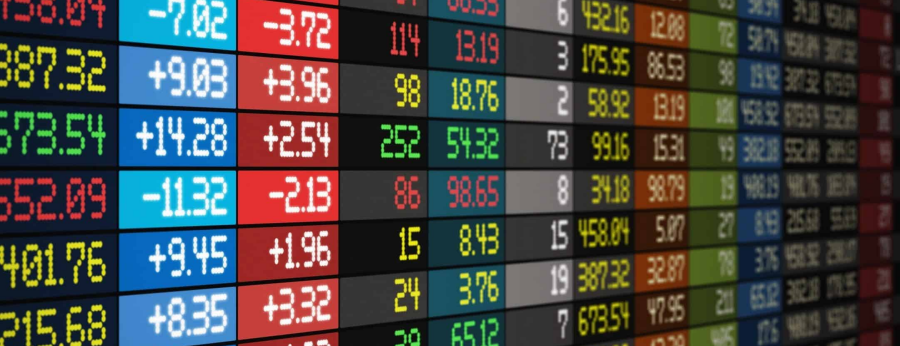
The full suite of trading software normally costs a staggering amount on a monthly basis, but we had it for free. One bank at one point kept missing their payments, so our company just switched off all the data and their screens went blank, for the whole bank. I’m not sure how long it took for them to make the missing payment but it was definitely just counted in minutes. The company charged a fortune, but they had to provide insane service. If your ICV screen had issues, we would fix it within 20 minutes. We were not even in the same building. We had cars full of replacement kit, and would run to them, drive as fast as possible to the bank, run up stairs with a new PC and swap them out without even saying hello. The actual faulty PC would be looked at later. Also, if there was a problem it would be fixed by the people who showed up, in one visit. Guaranteed, or the world would explode. We would not go home and come back to work on it tomorrow. Nobody goes home. It didn’t matter if it was 4AM, you were not leaving until it was fixed. It was a fascinating place to work.

Anyway… it gave me a big interest in the stock market which I already had dabbled in from when I studied for a degree in Economics. I had *some* cash when I worked there, and made a few trades. Our software was so comprehensive I could see my personal trade scroll through on the ticker and know it was me. These days, High-frequency trades and dark pools make that sort of thing academic. Oh well.

Anyway, this blog post is about autism (thats clearly me) and the markets. I think they are a match made in heaven. Trading stocks has a lot of attributes that really scare people off (or means they suck at it), but which seem perfectly fitted to my particular level of autism…

Firstly trading stocks is completely and utterly impersonal. I don’t speak to anybody about my trading, ever. There is no dealer to speak to, and I flat-out-ignore all the emails from my stockbroker for ‘a chat’. All trading is electronic (well…99% of it is), and you can trade all day long without having to talk to anybody. Bliss.

Secondly, trading well requires doing a lot of analysis that is mostly based on numbers. All the information is freely available, and its all in electronic form. If you enjoy making spreadsheets that compare things, this is heaven. Most of all, the numbers are TRUE. Apart from the super-rare cases of outright fraud, we can all know for definite how much revenue Netflix made in the last quarter, and how much their stock has risen or fallen or been diluted. The facts of the matter are never in dispute, the data is absolutely true.

Thirdly, being emotional regarding stocks is a DISADVANTAGE. The more clinical, and analytical you can be, the better. This is an occupation when a cold logical vulcan approach is absolutely beneficial. You do not need the stocks to like you, or make them laugh, or make small talk with them. In fact any kind of emotional reaction to a stock is a negative. The best traders are very very detached from the decisions they are making. Its ideal for people who prefer facts over feelings.

Now saying that is easy. DOING it is staggeringly hard. Humans are vulnerable to so many cognitive biases and stupid emotional outbursts that its amazing we invented the wheel. However you can narrow it down to a few common mistakes people make regarding trading stocks:

  • When you buy a stock and it rockets up, people want to SELL so they can ‘lock in their gains’.
  • When you buy a stock and it steadily drops over a long period, you hold it anyway to avoid ‘crystalizing a loss’.
  • If you really like a product, you sometimes buy a stock thinking that makes it a good stock to buy.
  • You want to feel like a hotshot trader so you buy and sell all the time, to feel like you are doing something.
  • A stock you buy is up 500%. You sell, because otherwise you are ‘tempting fate’ or ‘being greedy’.
  • A stock you want to buy has recently gone up 500%. You don’t buy because ‘you are too late’.

All of this is emotional bullshit. The actual way to trade is simple to describe, staggeringly hard to do. You look at companies that seem like good companies according to your analysis of their product, their leadership, their future plans, the competition. You look at the data regarding their financials, and then you calculate how much their market cap SHOULD be. You can then work out if they are a bargain *at this price*. If so, you buy. And theoretically every day, you do the same analysis. If they ever stop being a bargain you sell.

Sounds easy-peasy (but maybe a lot of analysis)

It’s STAGGERINGLY hard if you get emotional. The very hardest thing is loss-aversion. People HATE selling a stock at a loss as this means they have definitely lost money. Even though its clearly dying and dragging you down with it, people cling on like its some sort of pet. This is how most people lose money.

Oh…options…

In the UK, most people don’t trade options. Most individuals do not have access to the full range of options that are traded elsewhere in the EU or US/Canada. I cant find anywhere that sells a lot of LEAPs. Options trading is something that I do not do, although I have done it in the past. The reason I do not do it is that I have learned my lesson. I used to trade options quite a lot, sometimes trading the same option 4 or 5 times a day. I did stocks and also currency options. I thought I got quite good at it, and it seems like easy money.

Then one day I lost a staggering amount of money. I actually don’t want to look up what it was, but I know it was at least 10 years work as a boatbuilder. How long did it take to lose it? About 5 minutes. I could not sleep that night. I was distraught.

To be fair, I was not short of money, and have since easily made it back on normal buy & hold stock trading. I have not traded options since. Options are like nuclear weapons. They all seem like fun and games until Hiroshima is vaporized, where Hiroshima is your life’s savings. Do not do it. No ifs and buts, just do not do it.

What I DO dabble in (quite often) is leveraged commodity ETFs. This is very risky stuff. Its the riskiest thing I do. I only do it with about 1% of my investments. Its been hilariously profitable, but its risky, and I don’t recommend it. What I recommend is doing a LOT of reading, a lot of analysis and buying and holding stocks of companies that seem undervalued, and having the patience to see the investment come good. This could be *any* company. Over the years I have done well out of companies that make customizable teddy bears, sporting goods, software, cars, electrical equipment, pharmaceuticals and tons of other things.

Oh and one last tip: The financial news (CNBC, Bloomberg, Yahoo finance etc) is all absolute garbage. Complete trash. Do not believe anything you read in the ‘financial news’. They are not selling information or analysis, they are selling ad-space, and the clickbait is designed to maximize that. This is why you can see headlines that say ‘Tesla SOARS!’ and ‘Tesla in freefall!’ within 2 hours of each other on the same site. The ‘journalists’ cranking out ‘market coverage’ are ad-salespeople. They have no idea what they are actually writing about.

So anyway, I write this not as specific stock advice (thats for you to research), but to point out that if you are someone like me, who finds personal interactions hard, who has problems working in teams, or for other people, then if you can find a way to make income through investments, you might find it perfectly suited to you. The reality is that a lot of very successful investors are quiet solo geeks sat at a laptop, not loud alpha-males screaming at each other wearing designer suits. Frankly the alpha-males are not very good at it. (but they like to play the role until it goes wrong, thats for sure).