Long time readers of this blog will know that in the past we have funded two schools being built in Cameroon through the charity ‘Building schools for Africa‘. To cut a long story sort, I wanted to do something charitable, that was efficient and effective, and frankly you get a real good ROI when you do something like this, rather than donate to a charity in a relatively rich country like my own. £15-20k spent on a UK school gets you not much, but it builds a whole school in Cameroon, so to me the choice is obvious. FWIW I have no connection to Cameroon, I’ve never been there, but its a poor country that could really do with some help.
I did actually do one local school thing here, We paid for solar panels to be put on the roof of a local primary school. If you are wondering what this solar obsession is all about, I started a solar-farm company and built one in the UK. Its a loooong story :D. Oh and we donated a bunch of money to War Child in the past too, which is a super worthy charity for refugees.
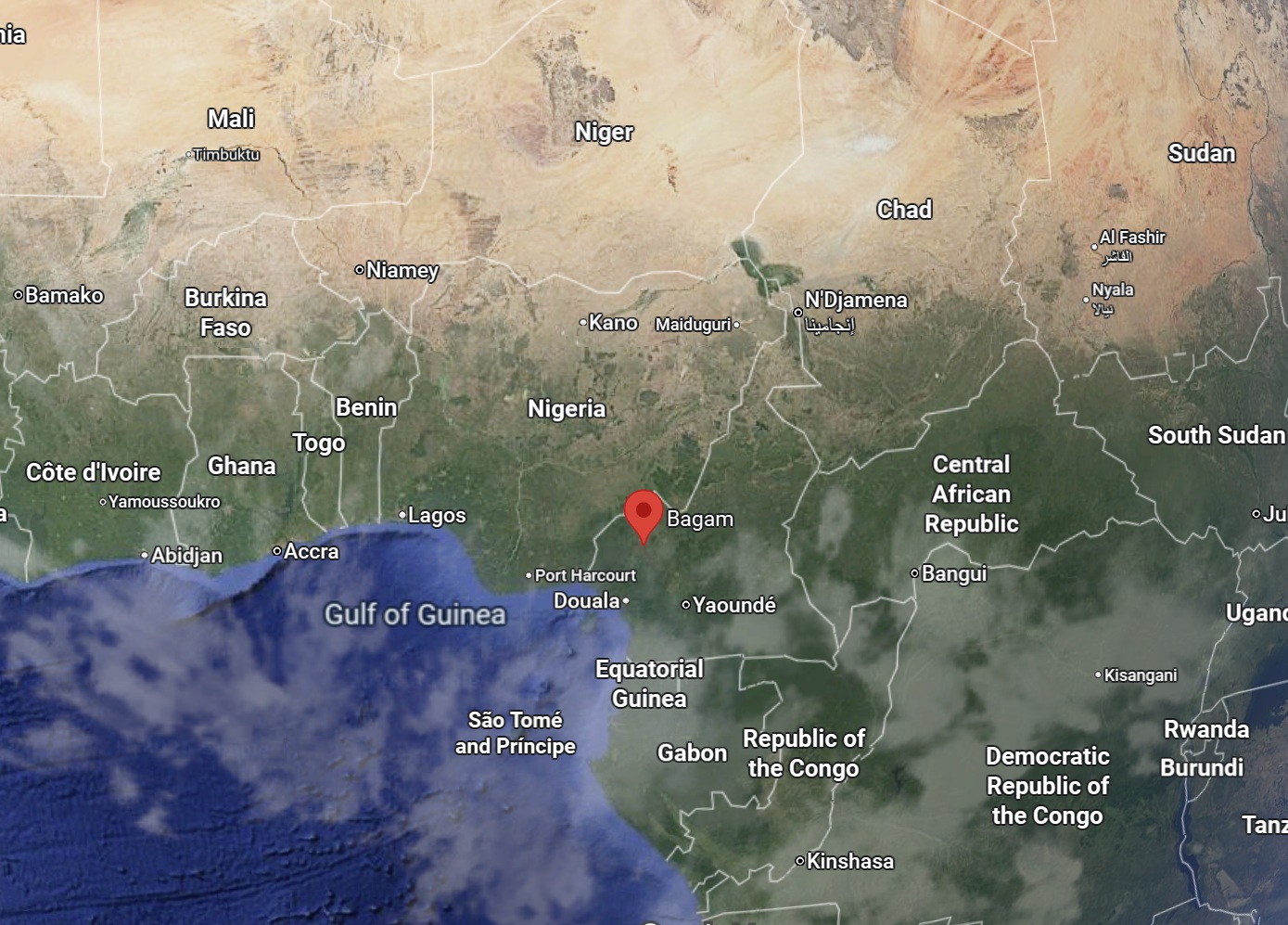
But anyway, we are doing it again! After a long gap in charity giving while I got stressed about the spiraling cost of the solar farm, I can finally do stuff like this again. I had contacted Building Schools For Africa a while ago saying if they have any more solar-powered borehole projects, I would love to fund one, and they recently got in touch with just that. They send you a big government study on the problems, the impact a borehole would have, a cost spreadsheet and feasibility report etc. In this case, I was sent the one for the school (which was paid for by another donor) at the location where they need a borehole and it made very depressing reading. The borehole will be in bagam, shown here:
If you read that report, you would NEVER complain about your school again. Its unlikely your school has insufficient textbooks, or a dirt floor that floods in the rainy season. Its unlikely that the roof leaks so badly that the (shared) schoolbooks get destroyed. Its very unlikely the lack of a door means stray animals wander in and do animal things in the classroom. And its super unlikely that all the kids arrive late, and tired because they have been sent miles before school to fetch water.
Luckily, a proper engineered borehole solves a lot of problems. Its mostly one of time. We take fresh, clean, drinkable water for granted, but we should not, because its not universal. If you have a long walk to fetch water every day, thats a huge economic impact. Less time to attend school, less time to work, and it has serious economic implications. Being able to access clean reliable drinking water right next to a school will be a fantastic thing!
The cost is about £20k. Here is some detail from the charity:
The project provides for a solar-powered pump, to take water from the borehole to a large storage tank and pipework to take it on to 3 stand taps at central locations in the community, as well as training in the maintenance of all aspects of the facility. This project is expected to totally transform the community and allow it to thrive: it is also seen as a peace-building initiative in a part of Cameroon that has been struggling for the past ten years due to additional pressures caused by the anglophone crisis.
And from the feasibility report:
Due to the topography the environment and that of the school. We came up with the various considerations

The overhead storage tank can be constructed at the school where the borehole will be drilled. The water storage tank will have to be constructed high enough to overcome the steep nature of the environment to be able to supply water up to the market.

The borehole can be drilled at the market where it is higher than the surface of the school. The storage tank will be constructed just few meters above ground. With this height difference, with the help of gravity, water can easily flow down slope to the market, the priority consumers which is the school, the palace and nearby residents.
TBH I think ‘palace’ might be a mis-translation, as looking at the location, I do not see anything I would call a ‘palace’. Anyway, I am excited about the project, because I love solar power, and remote communities in Africa is EXACTLY the best use case for distributed solar generation. I’m definitely looking forward to seeing updates on the project. And of course solar powered means super-convenient, and no work for people collecting water. Plus I think its awesome that for a lot of those kids, they will start to associate electricity with solar power by default, which makes sense.
Anyway, this is my ‘feel-good’ project for the year!